
How to Find Asian Music Promoters
The honest first answer to “how do I find an Asian promoter” is that you’re asking the wrong-shaped question. There’s no central directory, no LinkedIn-for-Asia-promoters, and no single gatekeeper — because there’s no single Asian market. A promoter who’s right for a shoegaze band in Yogyakarta has nothing to do with the one who’ll book a techno DJ into a Shanghai club, and treating “Asia” as one search is exactly how artists end up cold-emailing a generic list that goes nowhere. What actually works is a method, not a list, and it’s the same method across every country in this series.
Start with showcase festivals — one of the highest-leverage ways in
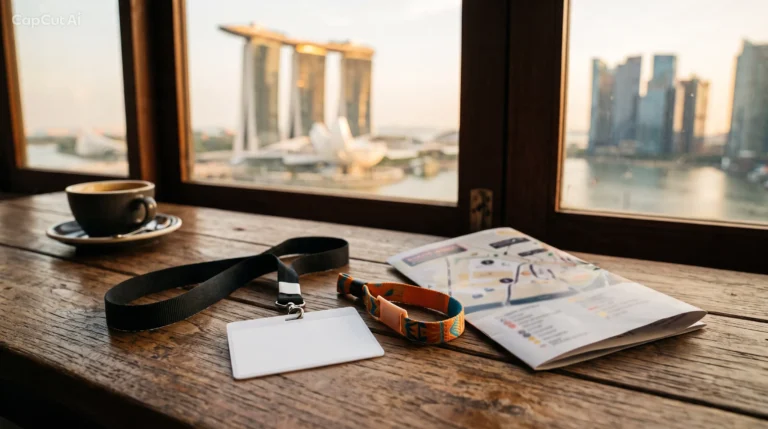
If you’re serious about entering an Asian market, showcase festivals should be one of your first research stops, whether or not you intend to apply to play. Showcase festivals put real promoters, bookers, and industry contacts in one room in a way cold outreach on its own rarely surfaces. Zandari Festa and MU:CON in Korea, Music Matters Live and Baybeats in Singapore, and Japan’s showcase circuit all exist specifically to connect artists with the people who book them — that’s the entire premise of the event. You don’t need to be selected to play to get value from attending; delegates and industry badges exist for exactly this reason. A single well-worked showcase weekend can give you more legitimate industry contacts than months of blind outreach, and every conversation starts from a shared room rather than a cold inbox.
The real network is scene-specific, and it’s built through people, not platforms
Once you’re past showcases, the actual work is finding the specific collective, label, or promoter whose existing taste matches your sound — not a generic venue list. This is the single most consistent pattern across every country we’ve researched in this series. In Bandung, it’s collectives like Liga Musik Nasional, not a venue booking inbox. In Jakarta’s electronic scene, it’s Dekadenz or Raw Vision Collective, not Jakarta’s clubs generically. A punk or metal act in Jakarta goes through Rossi Musik’s network; a Britpop-leaning act goes through Weekenders Service Crew. Each of these is a real, findable entity — but you find them by researching who’s actually booking artists who sound like you, not by searching “promoter Indonesia.”
The practical version of this: pick five artists whose sound genuinely overlaps with yours who’ve already toured the country you’re targeting. Look at who booked them — check show credits, festival lineups, tour posters, and interviews. That promoter, collective, or label is a vastly better first contact than anyone you find through a generic search, because they’ve already proven they book your kind of music.
Don’t build a list of “Asian promoters” — build a list of promoters for your artist
This sounds semantic, but it changes the research completely. If you’re a drum & bass artist, you don’t need 100 promoters in Japan — you need the 10-20 people actually involved in drum & bass, bass music, and the electronic club nights in the specific cities you’re considering. Organize whatever you’re building around genre → city → promoter → artists they’ve actually booked, not country → promoter. A list built the second way is just a directory. A list built the first way is a shortlist you can actually work.
Build a shortlist before you contact anyone
Don’t start by collecting 200 names for one target country — you’ll never work through it properly, and most of it will be irrelevant anyway. Start with 20-30 prospects and classify them roughly like this:
| Priority | Type | Why |
|---|---|---|
| A | Promoter who already books your genre | Highest probability |
| A | Collective running your specific scene | Strong local connection |
| B | Venue with a history of booking similar artists | Possible entry point |
| B | Festival or showcase organizer | Higher exposure, longer lead time |
| C | General music promoter with no clear genre focus | Lower relevance |
| C | Generic booking agency | Research only, not a first contact |
From there: 20-30 prospects → research each one properly → 10 or so genuinely strong fits → 5-8 actual pitches. That’s a workable number for a first market entry. The goal was never to contact everyone — it’s to identify the right handful and approach them properly, which is a completely different exercise from mass outreach.
Local music webzines and blogs are an underused shortcut
Every scene in this series has had at least one long-running, independent local outlet that functions as a real map of who’s active — deathrockstar.club in Indonesia is a good example, and most countries have an equivalent. These outlets cover gig announcements, album reviews, and scene features, and reading a few months of coverage will surface the same names repeatedly. Look specifically at who keeps coming up, not just who publishes the coverage — the same promoter, the same collective, the same venue, the same festival, the same handful of photographers and media people. That repetition is the signal: it’s how you start seeing the actual network behind a scene, not just a static list, and it tells you who’s active right now rather than who was active when a five-year-old guide was written.
Export offices and cultural bodies are worth checking, especially for funding-adjacent opportunities
Some countries in this region run government-backed cultural export programs specifically designed to connect international artists with local industry contacts — Korea’s cultural export infrastructure is a notable example. These bodies aren’t promoters themselves, but they often maintain directories, run delegate programs at showcases, or fund exactly the kind of market-visit trip a first tour represents. Worth a direct search for “[country] + music export office” before assuming you’re on your own — availability and scope vary a lot by country, so treat this as a lead worth checking rather than something to count on.
Submission platforms are a supplement, not a strategy
Tools like Groover and SubmitHub connect artists with curators, bloggers, and some industry contacts including talent managers, and they’re worth using — but they’re built primarily around playlist placement and media coverage, not booking. Don’t mistake a curator inbox for a promoter network. Use these platforms as one input among several, not as your primary method for finding someone who can actually put you on a stage.
Verify before you trust — the same rule as anywhere else in this region
A name that looks legitimate isn’t automatically legitimate. The same due-diligence habit we recommend for verifying a visa sponsor applies to verifying a promoter: check for a real, checkable track record — an actual venue history, real show credits, a functioning social presence with genuine engagement, not just follower count. Don’t confuse a promoter’s social media presence with proof they can actually book and produce a show — 20,000 followers says nothing about whether someone has ever run an event. If a “promoter” can’t point you to shows they’ve actually booked, or gets vague when you ask specific questions about the room, the date, or the deal structure, treat that the same way you’d treat an unverifiable visa sponsor — as a real risk, not a formality.
The method, summarized
Work backward from artists who sound like you and have already toured there. Build a genre-and-city-specific shortlist, not a country-wide list. Treat showcase festivals as one of your best early investments. Read the local scene’s own press for a few months before reaching out to anyone. Check export bodies for programs you might not know exist. Use submission platforms as a supplement, never a substitute. And verify anyone before you commit money or dates to them.
This is genuinely more work than finding a directory and mass-emailing it. It’s also the version that gives you the best chance of finding the right people — every real relationship covered across our country guides in this series was built roughly this way, not through a cold list.
Where to go deeper
This article covers the method. The specific promoters, collectives, and contacts worth knowing by name — country by country — are what our individual Country Playbooks are built around, each with a working, verified industry directory for that specific market. If you know which country you’re targeting, that’s the faster path to actual names.
Need help figuring out which promoters are actually right for your project? We also offer one-hour strategy consultations for artists, managers, and labels considering Asia. Get in touch to discuss.
This article draws on patterns verified across our country-specific research in this series. Specific promoter and venue names, contact details, and booking practices vary by country and change over time — always verify current details directly before committing to a booking or payment.